Meet the Lecturers for The Economics of Crime
The Economics of Crime
Olivier Marie 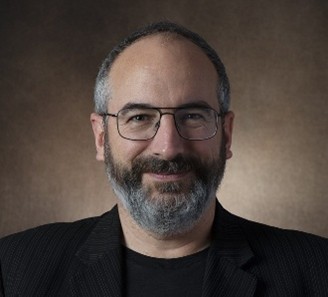 is Professor of Labour Economics at Erasmus School of Economics. His research focuses on the economics of crime, studying how education, labour market opportunities, social policies, and institutional decision-making shape criminal behaviour and reintegration outcomes. He uses applied micro-econometric methods and rich administrative data to provide causal evidence on what drives offending and what policies effectively reduce it. His work has examined the crime-reducing effects of schooling, how income shocks and labour market conditions influence criminal participation, and the unintended consequences of public policies such as policing strategies and sentencing practices. He also studies discrimination in the justice system and the role of immigration in crime dynamics, connecting empirical findings to real-world policy debates.
Nadine Ketel 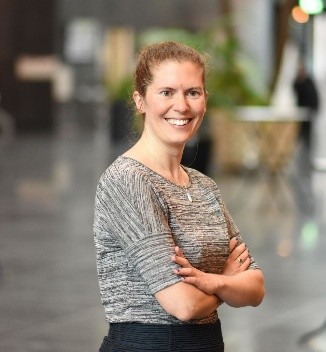 is Associate Professor of Economics at Vrije Universiteit Amsterdam and a Research Fellow at the Tinbergen Institute. Her research focuses on the consequences of crime victimisation, providing rare causal evidence on how victimisation affects individuals’ mental health, labour market trajectories, and longer-run wellbeing. She also studies institutional decisions in education and social policy, documenting how these shape inequality and exposure to criminal risk. Her work has appeared in leading journals including the Journal of Labor Economics, The Economic Journal, and Journal of Public Economics, and she has a forthcoming article in AER: Insights on criminal justice outcomes. At the Summer School, she will teach on victimisation and the broader impacts of crime using cutting-edge empirical evidence.
Amanda Agan 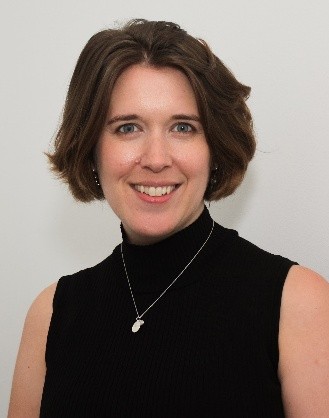 is Associate Professor at the Jeb E. Brooks School of Public Policy at Cornell University. Her research sits at the intersection of crime, labour markets, and discrimination, examining how criminal legal involvement shapes economic opportunities — and how employment barriers can contribute to involvement in crime. She studies how policies affect the behaviour and incentives of defendants, justice institutions, and individuals with criminal records, with a strong focus on evidence-based reforms that improve fairness and reduce inequality. She also investigates the sources and consequences of labour-market discrimination, using field experiments and administrative data to evaluate policy tools aimed at reducing biased decision-making. Amanda holds a PhD in Economics from the University of Chicago.
Giovanni Mastrobuonni 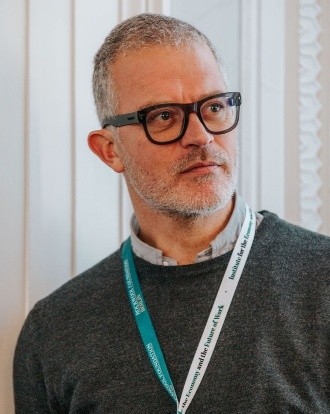 is Professor of Economics at the University of Torino and Carlo Alberto Chair at the Collegio Carlo Alberto. His research focuses on policing, prisons, and the economics of crime, examining how law-enforcement strategies, prison conditions, and sentencing policies affect criminal behaviour and recidivism. He combines highly granular administrative data with innovative empirical approaches to better understand deterrence, displacement, and incentives within justice institutions. His work is published in leading journals including the Review of Economic Studies, AEJ: Applied Economics, the Economic Journal, and Review of Economics and Statistics. At the Summer School, he will teach on police and prisons, bringing evidence from frontier empirical studies.
Paolo Pinotti 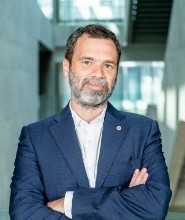 is Professor of Economics and Endowed Chair in the Economic Analysis of Crime at Bocconi University, where he also serves as Dean of Faculty. His research uses administrative data and applied micro-econometrics to study organised crime, corruption, and the effects of migration and labour-market policies on criminal behaviour and social outcomes. He is the founder of CLEAN, a research unit focused on producing evidence for crime-reduction policy. His work has been published in top journals including the American Economic Review, Econometrica, Journal of Political Economy, and Review of Economic Studies, and he has received the AEJ: Applied Economics Best Paper Prize. Paolo holds a PhD in Economics from Universitat Pompeu Fabra.
Contact
Summer School
