NWO Vidi grants for three Tinbergen Institute research fellows
Dutch Research Council (NWO) has awarded Vidi grants to three TI research fellows from the University of Amsterdam and Erasmus University Rotterdam.

The grants amount to a maximum of €850,000. This will enable these researchers to further develop their own line of research and to set up or further expand their own research groups.
Granted Projects in alphabetical order
Jana Cahlikova (Erasmus University Rotterdam)
Groupish or not: Why do some people discriminate more than others? 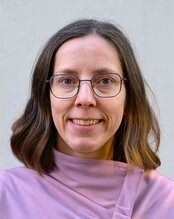
Do some people discriminate more than others, whether the group boundary is ethnicity, gender, or political affiliation? And is this tendency stable, or does it depend on the situation? This research project uses a large panel study tracking the same individuals over several years, online experiments, and brain measurements to answer these questions. The researchers examine whether discriminatory behavior is consistent across different group boundaries, whether it is driven by beliefs about other groups, and what distinguishes people who discriminate more from those who discriminate less. The findings will inform policies aimed at reducing discrimination.
Nadine Ketel (University of Amsterdam)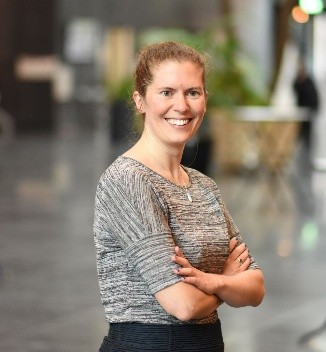
Hidden Costs of Crime: Determinants and Consequences of Victimisation and How to Mitigate Them
Every year, millions of children and young people are affected by crime, either directly or through family, classmates or friends. Ketel will study how these experiences influence educational outcomes and contribute to widening inequalities. Using unique Dutch data linking individual crime, school and court records, she will measure the direct and indirect effects of victimisation, identify the role of school environments in shaping victimisation risk, and evaluate how policies and criminal justice practices influence these impacts. Her findings will provide schools, governments and policymakers with evidence to design targeted support, guide resource allocation, and reduce the educational consequences of crime.
Chen Li (Erasmus University Rotterdam) 
Feeling Strategic: How Emotions Shape Strategic Interactions
People often make decisions under social ambiguity where they are uncertain about others’ intentions and actions. At the same time, emotions expressed —such as anger, pride, or disappointment—can strongly influence how people interpret information and behave strategically. This project studies how emotional communication affects decision-making under such social ambiguity. By combining insights from psychology and sociology with economic modelling and experiments, the project develops a framework to measure how emotions shape beliefs, cooperation, and negotiation. The results provide quantitative insights that can help design better interventions in socially interactive environments.