Meet the Lecturers for Development Economics
Development Economics
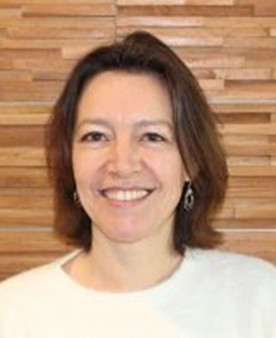
 Wendy Janssens is Professor in Development Economics at the Vrije Universiteit Amsterdam.. She is the director of the HERA institute (Health Economics Research Amsterdam), academic board member of the Amsterdam Institute for Global Health and Development (AIGHD), and research fellow at the Tinbergen Institute. She is also research advisor for PharmAccess Foundation. Currently, she is leading amongst others an interdisciplinary research programme on mobile technology and universal health coverage for mothers and children in Kenya, including the evaluation of maternal mental health interventions.
She has received numerous research grants, including a BRAC grant to study digital finance, women's empowerment and mental well-being in Kenya; a DFID-ESRC grant to study social norms and child marriage in Pakistan; an NWO-Wotro grant to study family planning, HIV/AIDS and empowerment in Mozambique; and an NWO-VENI grant to study the interaction between health insurance and microfinance in Sub-Saharan Africa.
She has extensive experience in designing and coordinating multi-disciplinary research programmes to provide rigorous and locally grounded policy advice to national and international organisations as well as governments (such as Oxfam Novib, Pathfinder International, the Ministry of Foreign Affairs, the World Bank). Research: Impact evaluations and behavioral, experimental and micro-econometric analyses of (i) access to health care and health insurance, (ii) global mental health, (iii) sexual and reproductive health (iv) gender, intra-household decision-making, polygamy, and violence against women and girls.
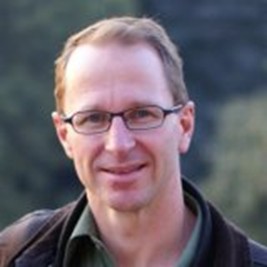 Peter Lanjouw is Professor in Development Economics at the Vrije Universiteit Amsterdam. He is current editor of the World Bank Research Observer and a past assistant editor of the World Bank Economic Review. Prior to joining the VU Economics department in January 2015, he had spent more than two decades in the Development Economics Research Group of the World Bank, most recently as Manager of the Poverty and Inequality team. He has taught courses at the Delhi School of Economics, the Foundation for the Advanced Study of International Development, Tokyo, and the University of Namur, Belgium, and has held a visiting position at the University of California, Berkeley. He is current editor of the World Bank Research Observer and a past assistant editor of the World Bank Economic Review. He is a fellow of the Tinbergen Institute and a core member of the Global Poverty Commission, convened by the World Bank.
His main research interests are: i) measurement and analysis of poverty and inequality in developing countries; ii) structural transformation in developing economies; and iii) contribution of longitudinal village studies to the analysis of rural development.
Remco Oostendorp 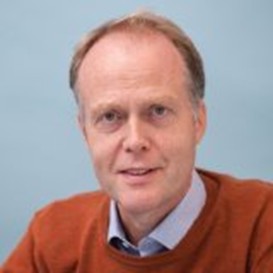 is Professor of International Economics at the Vrije Universiteit Amsterdam. He is also a Research Fellow of the Tinbergen Institute (TI), and Resource Person for the African Economic Resource Consortium (AERC). He has worked as an international consultant for the World Bank, ADB, ILO, UNDP, USAid, IDRC, among others. His main research interests are in development and international economics, specifically the effects of globalization, integration of labor markets, firm performance and structural transformation, climate-smart agriculture, and global value chain integration.
Menno Pradhan 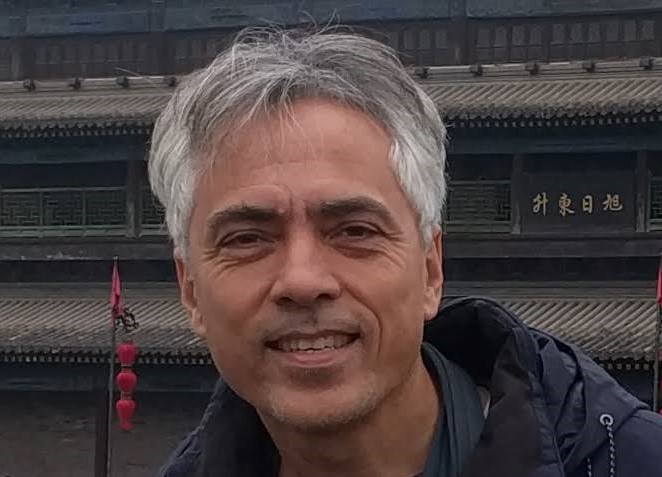 is Professor in Project and Program Evaluation for International Development at the Vrije Universiteit Amsterdam and University of Amsterdam. Prior to this he worked at the World Bank office in Indonesia (7 years) and Washington (2 years), at the VU (7 years) and Cornell University (1 year). He is also a co-academic director of the Amsterdam Institute for International Development and a fellow at the Tinbergen Institute. His research interests are in the areas of basic education, early childhood development, community empowerment and health. All of his work is empirical, usually based on household surveys, or surveys that were specifically designed for the purpose of an impact evaluation.
Marc Witte 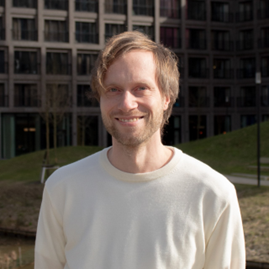 is Assistant Professor at the Department of Economics of the Vrije Universiteit Amsterdam. Previously, he was a Research Associate at IZA Bonn, where he remains a Research Fellow, and spent a gap year as a Postdoctoral Associate at NYU Abu Dhabi. He is also a JPAL Invited Researcher, a Research Affiliate at RFBerlin, and a Research Fellow at AIGHD. In 2019, he received his DPhil in Economics from the Department of Economics and the Centre for the Study of African Economies, University of Oxford. His research interests are in labor economics, development economics, and the economics of networks.
Contact
Summer School
