• Graduate Programs
    • Tinbergen Institute Research Master in Economics
      • Why Tinbergen Institute?
      • Research Master
      • Admissions
      • All Placement Records
      • PhD Vacancies
    • Facilities
    • Research Master Business Data Science
    • Education for external participants
    • Summer School
    • Tinbergen Institute Lectures
    • PhD Vacancies
  • Research
  • Browse our Courses
  • Events
    • Summer School
      • Applied Public Policy Evaluation
      • Deep Learning
      • Development Economics
      • Economics of Blockchain and Digital Currencies
      • Economics of Climate Change
      • The Economics of Crime
      • Foundations of Machine Learning with Applications in Python
      • From Preference to Choice: The Economic Theory of Decision-Making
      • Inequalities in Health and Healthcare
      • Marketing Research with Purpose
      • Markets with Frictions
      • Modern Toolbox for Spatial and Functional Data
      • Sustainable Finance
      • Tuition Fees and Payment
      • Business Data Science Summer School Program
    • Events Calendar
    • Events Archive
    • Tinbergen Institute Lectures
    • 2026 Tinbergen Institute Opening Conference
    • Annual Tinbergen Institute Conference
  • News
  • Summer School
  • Alumni
    • PhD Theses
    • Master Theses
    • Selected PhD Placements
    • Key alumni publications
    • Alumni Community

Douenne, T., Hummel, \.J. and Pedroni, M. (2026). Optimal Fiscal Policy in a Climate-Economy Model with Heterogeneous Households Economic Journal, :.


  • Journal
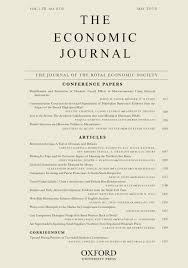
    Economic Journal

We study optimal fiscal policy to address climate change and inequality. We theoretically characterise optimal carbon and income taxes and quantify them for the US economy with a climate model calibrated to DICE. In contrast to the representative-agent setting, we find that (i) tax distortions have a negligible effect on the optimal carbon tax; (ii) inequality only slightly reduces it; (iii) the revenue from carbon taxes is optimally split about equally between reducing tax distortions and increasing transfers. Unlike the double-dividend policy, optimal carbon taxation has progressive welfare effects and low-income households benefit even in the short run.